Vegetable Oil Degumming Enzyme Procurement Guide
Clarivane is an enzyme supplier for edible oil degumming, built for refinery teams that need more than a product code. Enzymatic degumming affects crude oil handling, hydration, residence time, centrifuge loading, gum behavior, downstream phosphorus control, and neutral oil recovery. Procurement needs to account for all of it.
This guide frames vegetable oil degumming enzyme sourcing as a plant decision: how to evaluate fit, prepare a trial, receive and store material, control dosing, document performance, and plan reorders without risking refinery uptime.
Request a quote
Why enzyme procurement is a refinery performance decision
In edible oil refining, degumming enzyme selection is not isolated from the process. A good supply decision should support:
- Lower residual phosphorus entering neutralization, bleaching, or physical refining
- More stable centrifuge behavior under variable crude oil quality
- Improved separation of hydrated and enzyme-modified gums
- Reduced neutral oil loss into gums when the process is controlled correctly
- Practical dosing control for continuous operation
- Predictable receiving, storage, and reorder planning
- Documentation that quality, purchasing, and production teams can use
Clarivane works with refinery managers, process engineers, and procurement teams to make enzyme supply commercially practical from the first trial through routine campaigns.
What to define before requesting a quote
A useful quotation starts with process context. Before selecting a degumming enzyme supply plan, clarify the operating window and refinery objective.
Oil type and crude oil variability
Share the primary oils being processed, such as soybean, canola, sunflower, corn, or mixed soft oils. If the refinery sees seasonal variation, changes in crude supplier, or swings in non-hydratable phospholipids, that should be part of the discussion.
Current degumming route
Clarivane will usually ask how the line is currently operated:
- Water degumming, acid degumming, enzymatic degumming, or hybrid route
- Acid and water addition strategy
- Hydration temperature range
- Mixing intensity and contact time
- Residence time before separation
- Centrifuge type and observed separation behavior
- Gum moisture, gum viscosity, and discharge consistency
The goal is to place the enzyme into a process reality, not into a generic brochure condition.
Phosphorus target and downstream requirement
The buying case should be tied to the phosphorus level required after degumming. The target may depend on whether the refinery is running chemical refining, physical refining, specialty oil production, or a customer-specific specification.
For procurement, this matters because the enzyme program, dosing window, and trial acceptance criteria should be aligned with the actual downstream need.
Procurement criteria for a vegetable oil degumming enzyme
When comparing suppliers, refinery teams should look beyond headline claims. A practical procurement checklist includes both performance and implementation discipline.
1. Fit with the refinery process
The enzyme should fit the available equipment and operating pattern. Important questions include:
- Can the enzyme be dosed accurately with existing metering equipment?
- Does the process allow enough contact time?
- Is mixing sufficient for consistent enzyme-oil-water interaction?
- Will the centrifuge handle the modified gum phase without instability?
- Can operators maintain the required temperature and pH window?
Clarivane helps define a dosing and operating window that can be run by plant teams, not only demonstrated under ideal conditions.
2. Handling and storage requirements
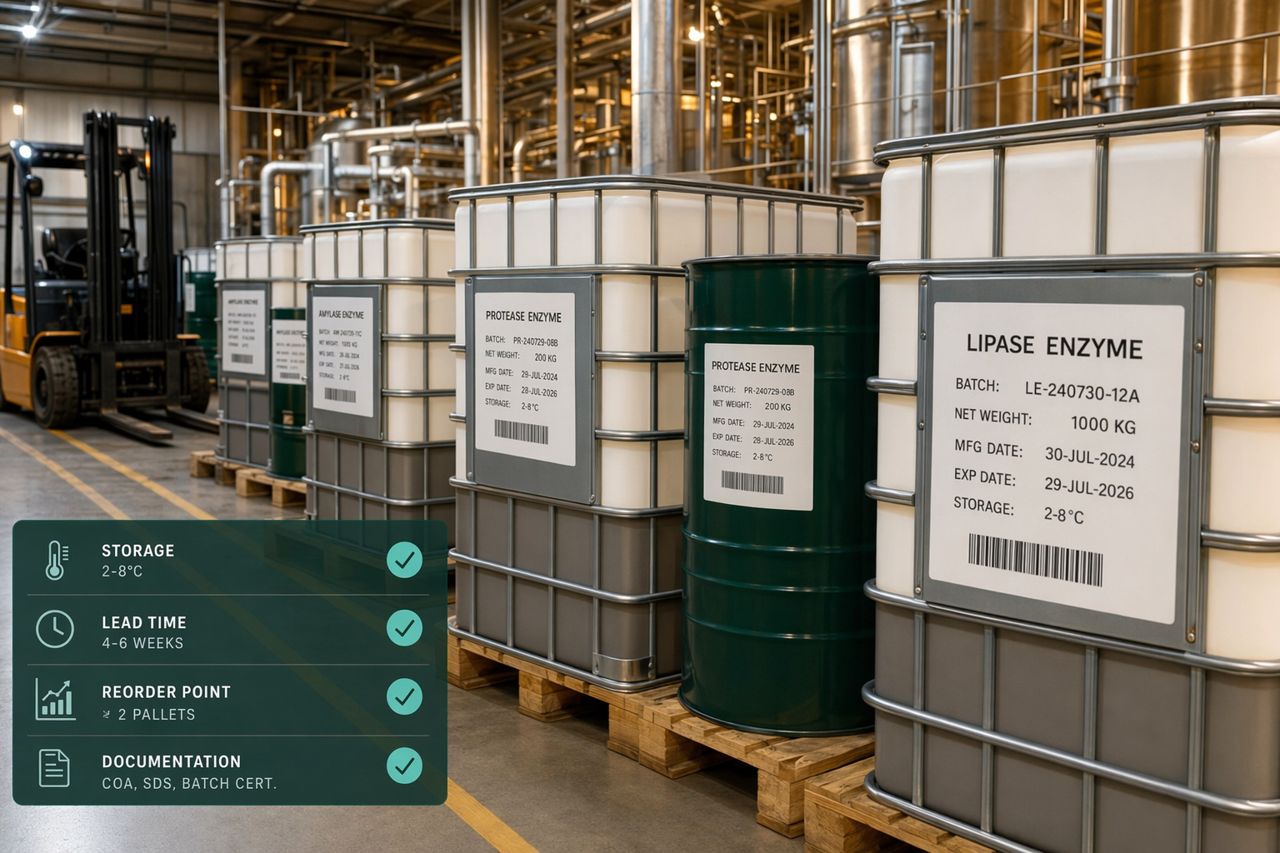
Procurement should confirm receiving and storage expectations before the first shipment. Clarivane provides practical guidance for:
- Recommended storage temperature range
- Protection from heat, direct sunlight, and contamination
- First-in, first-out inventory rotation
- Container handling and resealing practices
- Compatibility with plant dosing arrangements
- Shelf-life planning against campaign schedules
Good handling protects consistency. It also prevents the enzyme supply from becoming a hidden production risk.
3. Documentation package
A refinery-grade supply relationship should include documentation that supports purchasing, quality, and site acceptance. Clarivane can provide appropriate product and shipment documentation for the agreed supply program, such as:
- Product specification information
- Safety documentation
- Lot and batch traceability
- Storage and handling guidance
- Order and shipment identification
- Technical support records for trials and implementation
This helps the site maintain a controlled procurement file and supports internal approval workflows.
4. Trial design and acceptance criteria
A meaningful trial needs a scorecard before dosing begins. Clarivane recommends defining:
- Baseline phosphorus before enzyme application
- Target phosphorus after degumming
- Neutral oil loss indicators
- Gum phase appearance and handling behavior
- Centrifuge stability and discharge consistency
- Water, acid, and caustic impacts where relevant
- Operator observations by shift
- Sampling points and decision timing
The trial should answer a commercial question: does the enzyme improve the refinery’s economics and operating stability at scale?
Dosing control and plant implementation
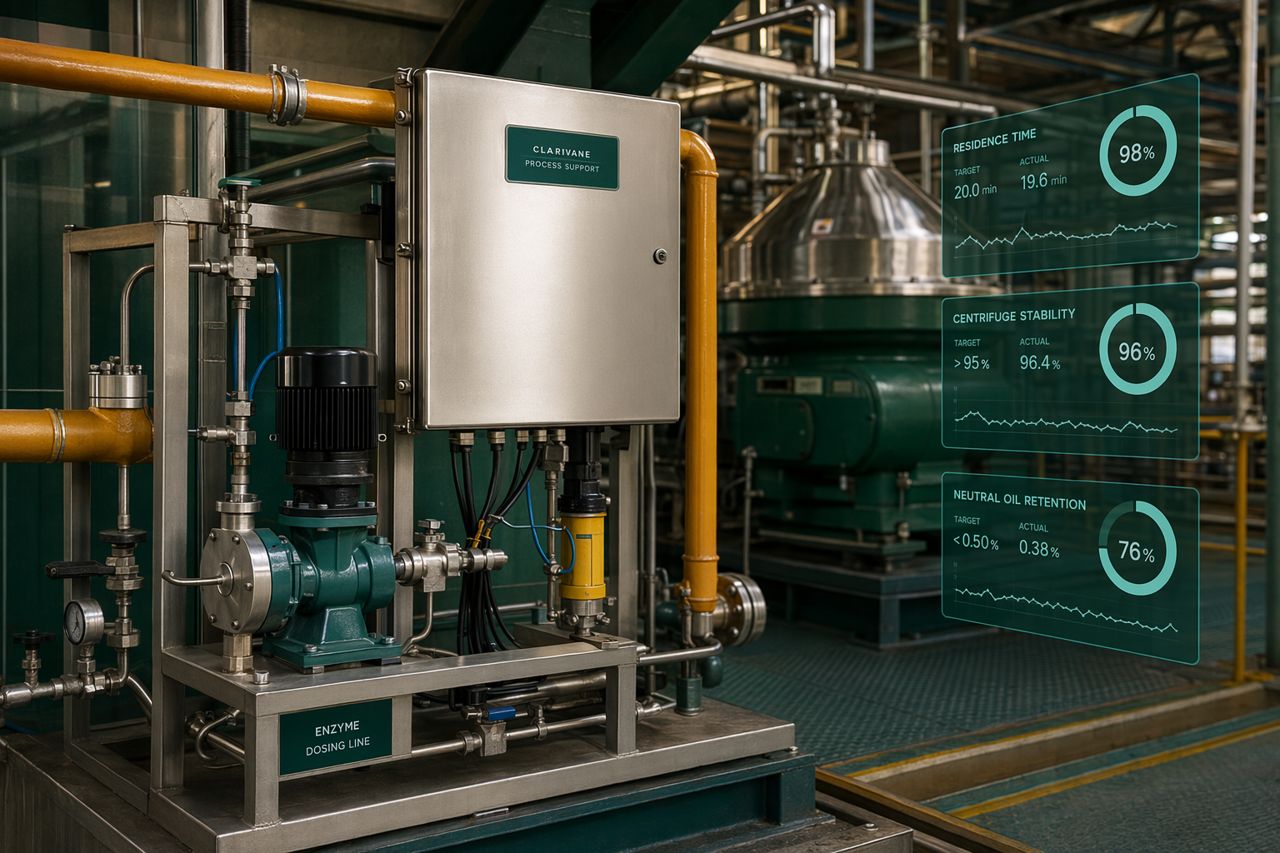
Enzymatic degumming works best when dosing is controlled, mixed, and verified through the line. Procurement should involve operations early so the quote reflects the way the plant actually runs.
Key implementation points include:
- Accurate low-flow dosing into the correct process point
- Consistent dilution or carrier strategy if used by the site
- Steady temperature and residence time control
- Clear operator instructions for start-up, steady operation, and shutdown
- Monitoring of centrifuge load, interface behavior, and gum discharge
- Practical adjustment rules when crude oil quality changes
Clarivane focuses on process accountability: the enzyme must be usable by the refinery team during routine production, not only during a supervised trial day.
Commercial value refinery buyers should evaluate
A vegetable oil degumming enzyme can affect multiple cost centers. The purchase price should be reviewed against the broader refinery value case.
Neutral oil retention
Improved gum separation and controlled conversion of phospholipids can reduce avoidable neutral oil carryover into gums. Even small improvements can matter when daily throughput is high.
Downstream chemical and bleaching impact
Better phosphorus control after degumming may reduce stress on later refining steps. Depending on the process, this can support more stable bleaching performance, lower rework risk, and more predictable final oil quality.
Throughput and uptime
Poor separation behavior can slow a refinery down. Procurement should ask whether the enzyme program supports stable centrifuge operation, manageable gum discharge, and repeatable production conditions.
Water and waste handling
An optimized degumming program may support more efficient water use and gum handling. The value depends on site design, wastewater load, and gum outlet strategy, so these should be included in the trial review.
Supply reliability and reorder planning
Once a refinery approves an enzyme program, supply continuity becomes critical. Clarivane supports procurement planning around:
- Forecasted monthly or campaign volume
- Lead time expectations by destination
- Minimum order and shipment planning
- Buffer stock strategy for critical production windows
- Lot traceability and incoming documentation
- Reorder reminders aligned with consumption rate
The objective is simple: the enzyme should be available before the refinery needs it, with documentation ready for receiving and quality review.
What Clarivane needs for a practical quote
To prepare a focused quotation for vegetable oil degumming enzyme supply, provide as much of the following as possible:
- Oil type or oil mix
- Refinery location and shipping destination
- Current degumming process route
- Daily or monthly oil throughput
- Current phosphorus before and after degumming, if available
- Desired phosphorus target
- Available residence time and operating temperature range
- Centrifuge configuration and any separation concerns
- Trial timing and expected campaign schedule
- Preferred packaging format and reorder frequency
If some details are not yet available, Clarivane can still start the discussion and help define the missing trial inputs.
Embedded faceless explainer video
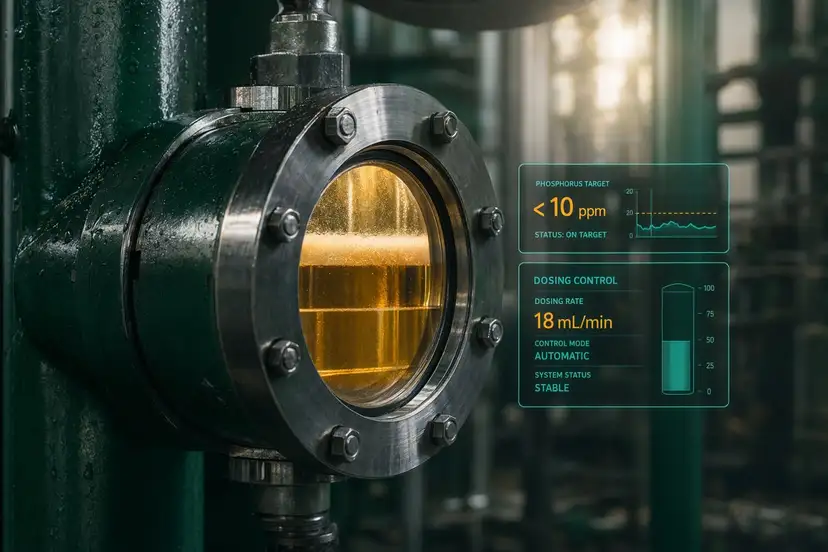
This page includes a one-minute faceless explainer with voiceover, on-screen subtitles, and industrial still-frame visuals. It shows amber oil clarification, phosphorus target overlays, dosing control, centrifuge arcs, storage discipline, and quote planning without any presenter or avatar.
Request a quote
Ready to evaluate enzyme supply for vegetable oil degumming? Send Clarivane your oil type, process layout, phosphorus target, trial timing, and estimated monthly volume.
Request a quote
Clarivane will review the application context and respond with a practical supply recommendation for your refinery.